


Most LA homeowners spend $400–$2,500 for a straightforward Level 2 EV charger install (hardware + labor). Costs rise to $2,500–$5,000+ if you need long wire runs, trenching to a detached garage, or a panel upgrade. Local incentives can offset a big chunk: LADWP offers up to $1,000 for the charger + $250 for a dedicated EV meter (with an extra $500 for income-eligible customers), and SCE’s Charge Ready Home can help with panel-upgrade costs for qualifying homes.
Why EV Charger Installation Costs in Los Angeles Are Different — and How to Budget
Los Angeles isn’t “average” America. Distances from panel to parking, older 100–150A services in vintage homes, and local permitting/inspection rules make EV Charger Installation Costs in LA a little different. The good news: with the right planning (and a realistic cost range), you can install once, pass inspection, and charge reliably for years.
Ready for Permit-Ready, Transparent EV Charger Pricing?
We map the route, run a quick load calc, and give a quote that holds up on install day.
What Drives the Cost?
1) The charger itself
- Hardware (Level 2): ~$300–$900 for reputable 32–48A units.
- “How much is an electric car charger for home?” Budget $400–$800 for most name brands; smart features and higher amperage push the price up.
(Price bands validated by current market roundups; your final pick should match your vehicle’s onboard charger and your panel capacity.)
2) Electrical scope
- Standard install: dedicated 240V circuit (usually #6–#8 copper), a 40–60A breaker, and a surface/flush mount near where you park. Typical LA homeowner out-the-door: $1,000–$2,500 for How Much Does EV Charger Installation Cost in common scenarios.
- Longer runs / conduit work: add cost for attic/crawl routing, drywall patches, or exterior EMT.
- Detached garage (trenching): expect added labor/materials for trenching and outdoor-rated conduit.
- Load management vs. panel upgrade: 100–150A services may still support a Level 2 if load calcs + smart scheduling/load-sharing check out; otherwise you’re into electrical panel upgrade in Los Angeles territory. (2023 NEC allows multi-EVSE on one branch under certain conditions; most homes still get individual circuits for >16A EVSE for performance.)
3) Permits & inspections
For most single-family homes, an LADBS Express Permit (online) covers typical EV branch-circuit installations; inspection is required after installation. Exact fees vary by scope, but the process is streamlined for simple residential work.
4) Panel upgrades
If your load calculation shows limited headroom, a 200 Amp Panel Upgrade in Los Angeles may be recommended. Expect several thousand dollars depending on service location, grounding/bonding updates, and utility coordination. Qualifying SCE customers can receive panel-upgrade rebates up to $4,200 (income-qualified) or up to $2,100 (geographic) toward make-ready costs.
Real-World LA Scenarios (What People Actually Pay)
These examples reflect typical 2025 LA projects and match what homeowners search for under How Much Does It Cost to Install an EV Charger, EV Charger Installation Costs, and Level 2 Home Charger Cost in Los Angeles.
- Attached garage, 20–30 ft from panel (hardwired 40A unit)
$1,000–$1,800 turn-key. (Permitting + standard materials included.) - Long interior run across finished spaces (50–70 ft, attic routing)
$1,600–$2,500 due to labor time, pulling heavier gauge, and patching considerations. - Detached garage needing trench (30–50 ft, outdoor conduit, GFCI/ in-use covers)
$2,200–$3,800 depending on surface, obstacles, and restoration. - Condo/townhome with HOA approval (meter room to deeded stall, conduit on common walls)
$2,000–$4,000+ driven by route complexity and HOA conditions. - Two EVs, one house (dual EVSE or load-sharing)
$1,800–$3,200 if panel has room; add more for long runs or outdoor work. - Panel at capacity → upgrade to 200A
+$3,000–$6,500 typical range, before incentives. Qualifying SCE rebates can reduce this substantially; LADWP charger/meter rebates may stack with utility programs where allowed.
Incentives That Change the Math (Read This Before You Buy)
- LADWP Residential EV Charger Rebate: Up to $1,000 for a qualifying Level 2 charger plus $250 for a dedicated EV meter; + $500 extra for eligible low-income/senior programs. Requirements and caps apply.
- LADWP Charger Installation page: Local guidance on obtaining permits & inspections and residential request forms.
- SCE Charge Ready Home (panel-upgrade rebates): Up to $4,200 (income-qualified) or $2,100 (geographic) for make-ready/panel work in SCE territory.
Pro tip: Capture your paid invoice, permit final, photos, and model/serial—you’ll need them to claim rebates smoothly.
Before you buy, check the LADWP Residential EV Charger Rebate Program to see if you qualify for up to $1,000 on a Level 2 charger plus a dedicated EV meter rebate.
When to Consider a 200A Upgrade (and when you don’t need it)
- Consider it if you want a 48A charger (60A circuit), electric range/oven, pool equipment, plus A/C running at the same time.
- Maybe skip it if load calcs show capacity and you’re happy at 32–40A charging with smart-schedule charging. (NEC 2023 allows more flexible EVSE circuiting, but performance is better with a dedicated circuit sized to your charger.)
How Much Does It Cost to Install an EV Charger in LA? For most homes, plan $1,000–$2,500, with complex routes or upgrades raising it to $2,500–$5,000+. The real savings come from doing it right the first time—correct circuit sizing, clean routing, and permits/inspection handled—to avoid rework. Pair that with LADWP and SCE incentives and your net cost can be meaningfully lower. If you want a quote that won’t change on install day, tik electric will walk your site, map the route, run the numbers, and set you up with a safe, code-compliant system that passes inspection and fits your daily routine.
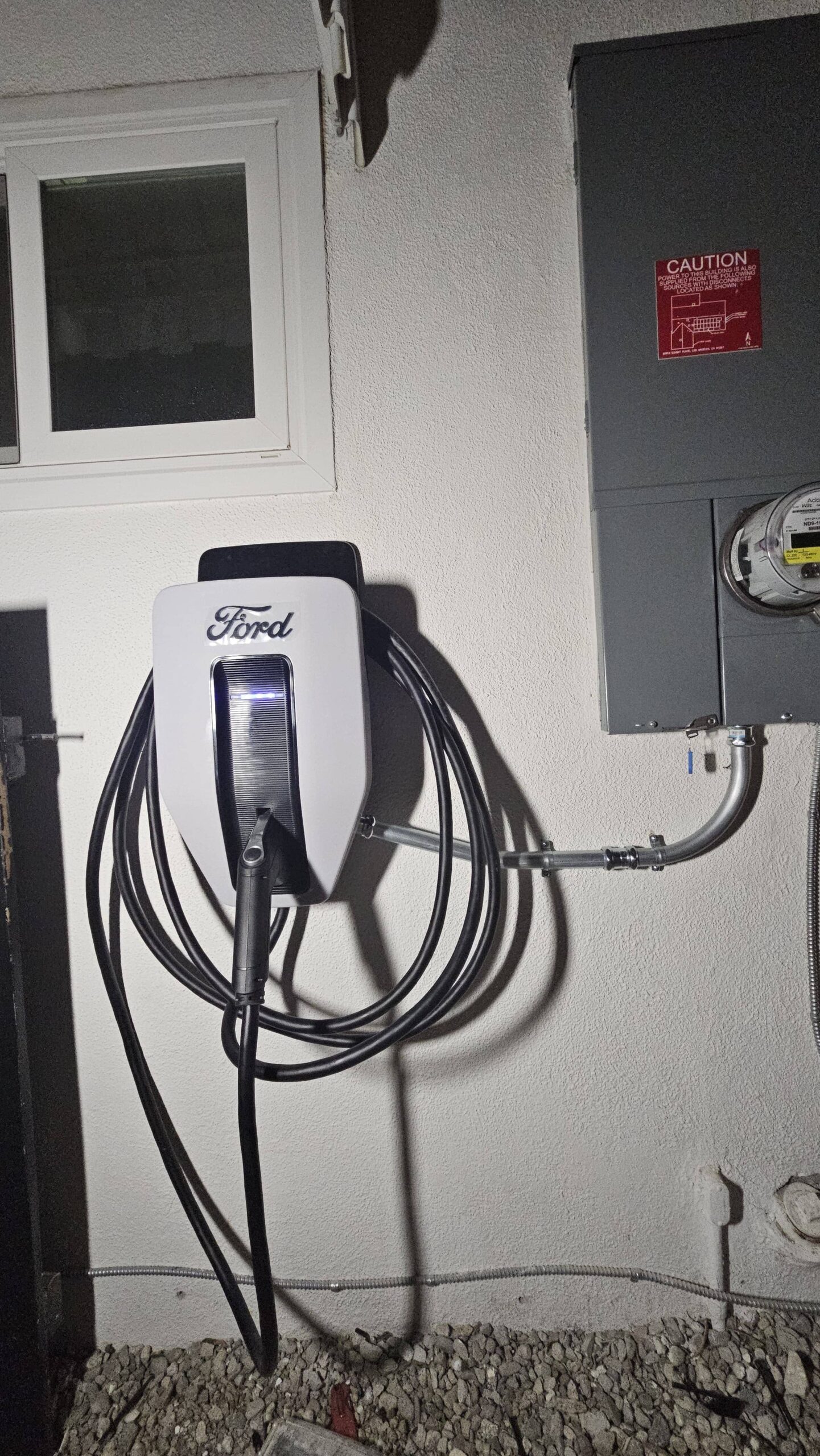
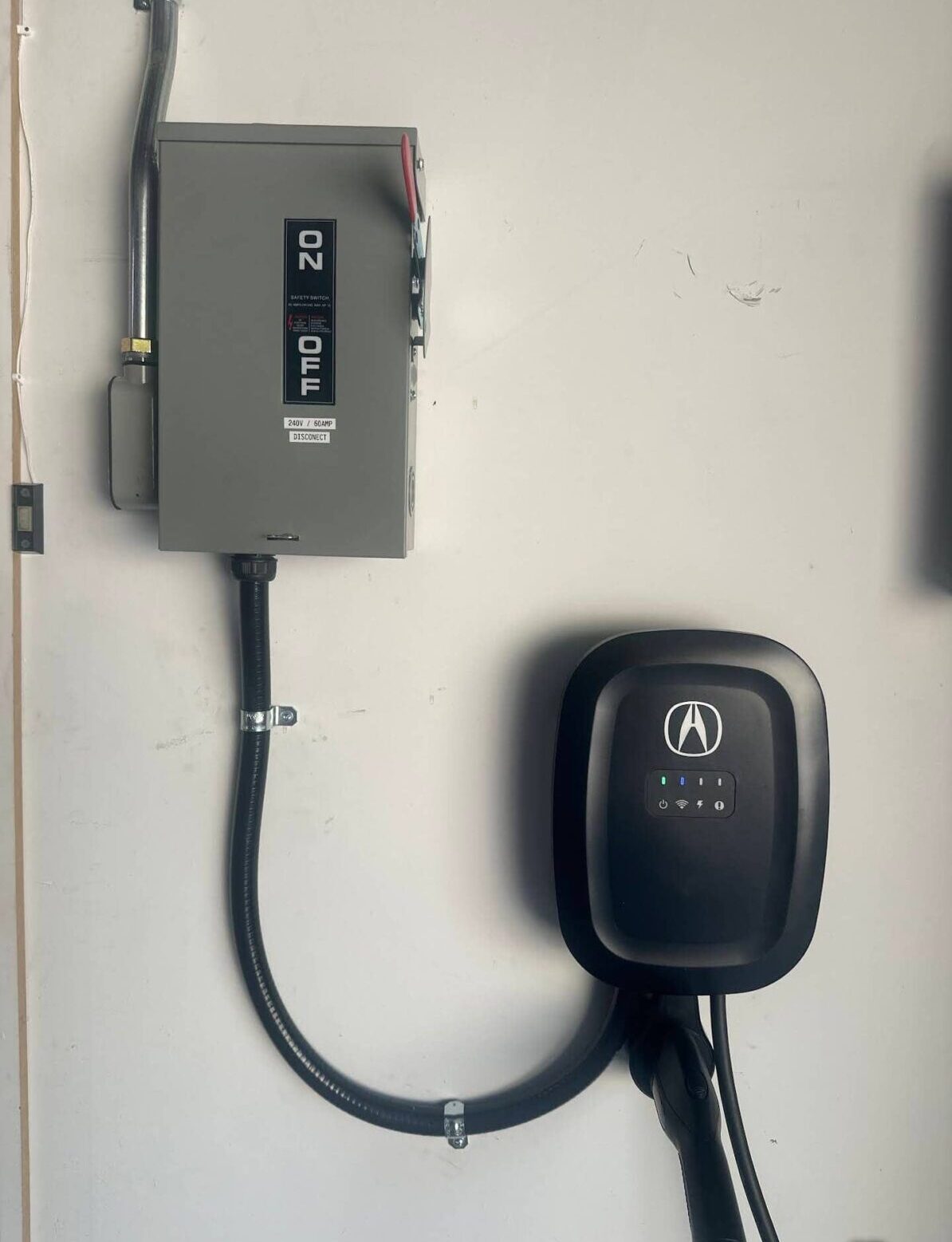
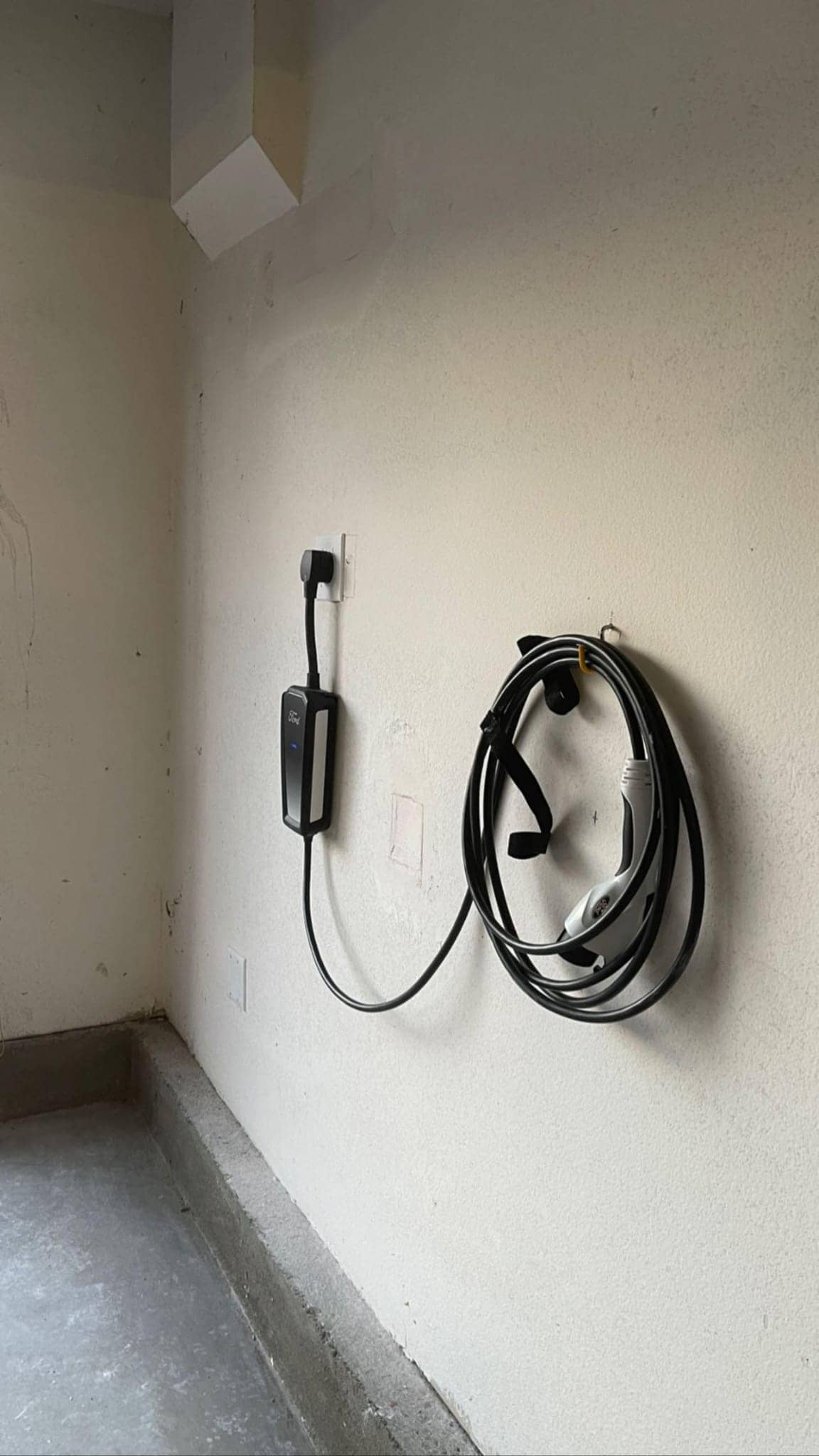
EV Charger Installation, Replacement & Repair — Recent Projects
FAQ
For most single-family installs, yes—an LADBS Express Permit is typical, with a final inspection after installation.
Standard same-day for simple runs; add time for HOA approvals, long routes, trenching, or panel upgrades.
You can usually combine LADWP charger/meter rebates with other programs if eligibility allows. SCE panel-upgrade rebates apply to qualifying homes in SCE territory; details matter, so we verify case-by-case.
Hardwired is cleaner and often preferred for outdoor or higher-amp installs; a NEMA 14-50 can be fine when sized and protected correctly.
Leave a Reply